By Jared Harding Wilson
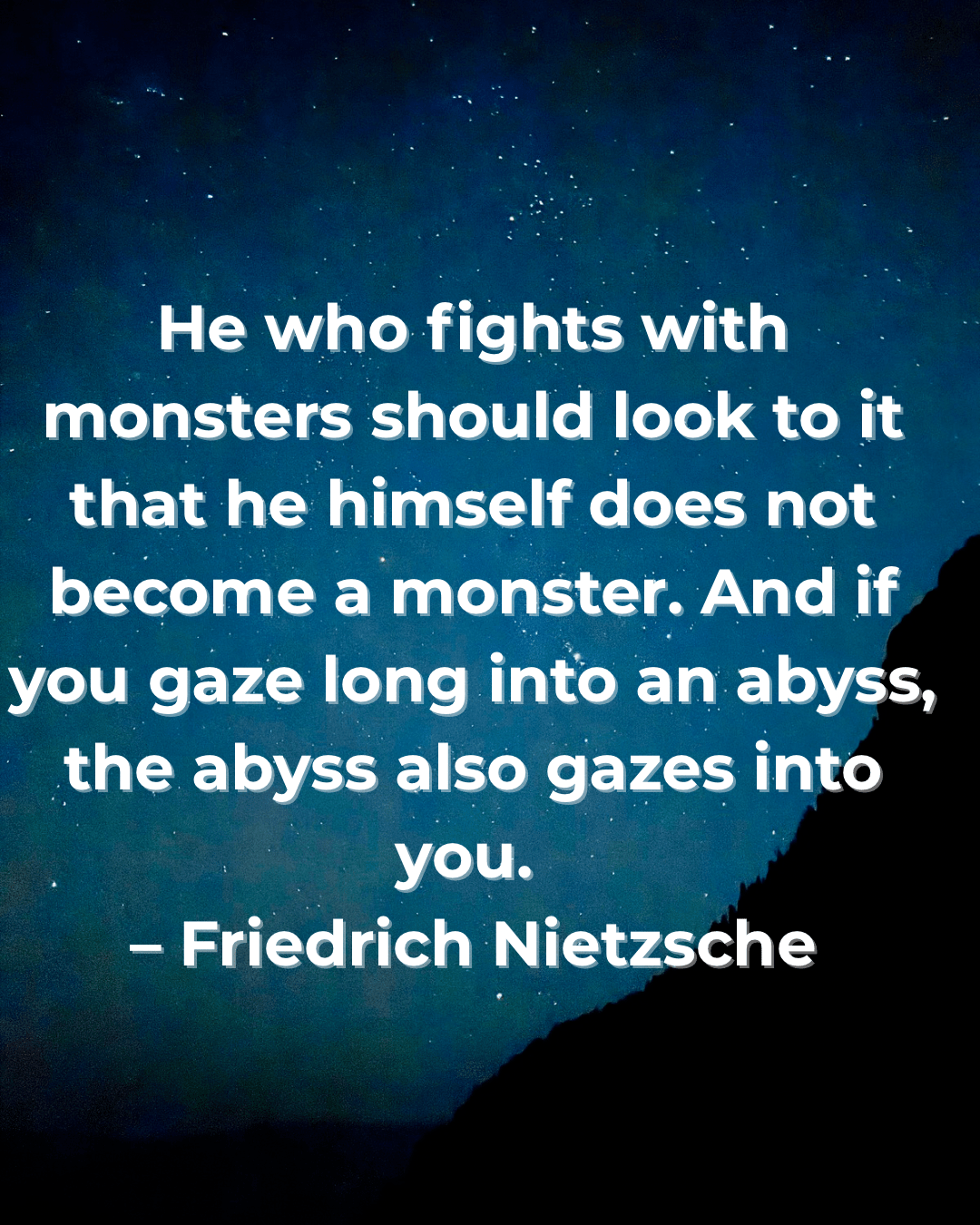
“He who fights with monsters should look to it that he himself does not become a monster. And if you gaze long into an abyss, the abyss also gazes into you.”
– Friedrich Nietzsche
Life’s challenges—whether difficult people, strained relationships, or tough circumstances, are more than mere obstacles; they are mirrors reflecting our inner selves. The frustrations or discomforts sparked by conflicts with others or situations often point to our own fears, weaknesses, or areas ripe for growth. These moments of tension, whether with a colleague, loved one, or a personal trial, aren’t just external struggles; they’re windows into who we are. How we respond reveals what we value and where we can improve.
Friedrich Nietzsche, the German philosopher who penned this profound quote, lived a life marked by intense intellectual and personal struggles. Known for his provocative ideas and critiques of morality, religion, and culture, Nietzsche faced chronic health issues, including debilitating migraines and neurological decline, which forced him into isolation in his later years. Despite these challenges, he continued to write with remarkable insight, exploring the depths of human existence, morality, and the will to power. His own battles with suffering and societal norms shaped his philosophy, emphasizing resilience and self-overcoming. Nietzsche’s ability to find meaning in struggle, even as his health deteriorated, reflects the heart of his quote: we must confront our challenges without losing ourselves to them, choosing instead to grow through the process.
Elder David A. Bednar, an LDS Apostle, offers a complementary perspective: “We are not human beings having a spiritual experience. We are spiritual beings having a human experience. Opposition is a natural part of life. Just as we develop our physical muscles through overcoming opposition—such as lifting weights—we develop our spiritual muscles by overcoming challenges.” This insight reminds us that conflicts, whether with others or circumstances, are divine opportunities to grow spiritually. Like Nietzsche, Bednar emphasizes that opposition—be it a disagreement with someone or a personal trial—isn’t something to avoid but a tool to refine our character and draw us closer to our divine potential.
Application:
• Pause and Reflect: When triggered by a person or situation, ask, “Why is this affecting me?” Your reaction often reveals a deeper truth about yourself.
• Observe Wisely: Instead of reacting impulsively in conflicts with others or challenges, study the dynamics. What do they teach you about your strengths or struggles?
• Embrace Growth: Use these moments to build patience, humility, or resilience. Let each difficulty, whether with another or in a circumstance, shape you into a better version of yourself.
True victory lies not in overcoming others or circumstances but in mastering ourselves through the lessons they bring. By seeing conflicts with people and challenges as opportunities for growth, we can transform even the hardest moments into steps toward becoming more Christlike.
Reflection:
• What’s a recent conflict with someone or a challenge that taught you something new about yourself?
• How do you stay mindful and avoid reacting impulsively in tough interpersonal situations or trials?
Share your thoughts in the comments below—we’d love to hear how you tackle those trials!
Photos by Jared Harding Wilson. All rights reserved.
Discover more from Hike Stars On Earth
Subscribe to get the latest posts sent to your email.
